A video letter to my 22-year friend.
In my 22 years life hitherto, media weighs significantly in molding my identity through imposing steady and multifaceted influence on how I interact with the world and me myself: it’s the subject I study as the focus of my academic life; it’s the outlet I source information and knowledge; it’s the platform on which I construct my presentation and channel values outward. After being diagnosed with have eating disorders, I started to rethink the dynamic between media and me, specifically how it influenced my beliefs and actions thus propelling me into an abusive relationship with my body. To address my thoughts, I “wrote” this video letter to this old friend.
Although eating disorder is a complicated illness that develops from manifold mental and physical factors such as genetic tendency and emotional trauma, according to studies in mass media semiotics, media indeed influences the audience on a cognitive level that consequently leads to change in beliefs and actions. While tailoring this visual message, I centered the advocacy argument around two fundamental dimensions of media’s wrongdoing in inducing and representing eating disorders – the glamorization of thinness and romanticization of the illness.
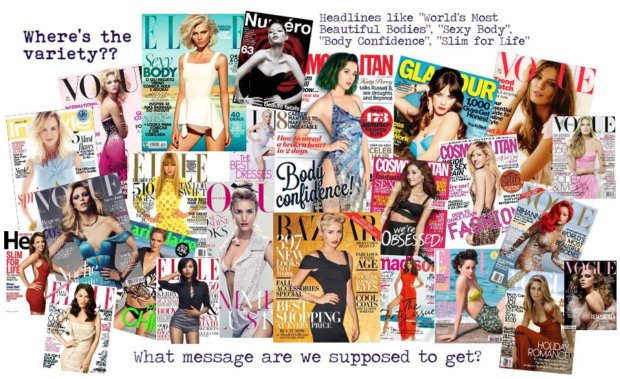
In the first dimension, elucidated in the 1997 study of objectification theory conducted by Fredrickson & Roberts, sexualizing female bodies under the “male gaze” and objectifying them as instruments for the pleasure and use of men function to socialize women internalize a “third-person point of view” to themselves. Such a self-adopted objectification intensifies body shame and anxiety, impairs flow experiences resulting in underperformance, and interrupts the awareness of internal bodily cues such as those for hunger and fullness, inarguably tied to the buildup of disordered eating patterns.

In the second dimension, though showcasing some pains, media largely portray eating disorders as an appealing and attractive asset that “help” characters to maintain a “normatively desirable body shape” and to successfully elicit rewarding social feedback such as verbal compliments. Moreover, media constantly associates skinny figures to positive images such as “self-disciplined” and frames weight-loss as an “inspirational nirvana,” triggering viewers to actively resemble disordered dietary practices. Also, narrowly representing patients as white teenage girls suffering from anorexia, the media erases the intersectionality of eating disorders by ignoring the fact that they happen to all age, gender, and ethnicity and appear in various types going beyond anorexia such as bulimia and binge eating. Such a toxic generalization breeds the insufficiency of knowledge about eating disorders, which should be condemned as the culprit of inducing the immense population of undiagnosed and untreated ED patients.
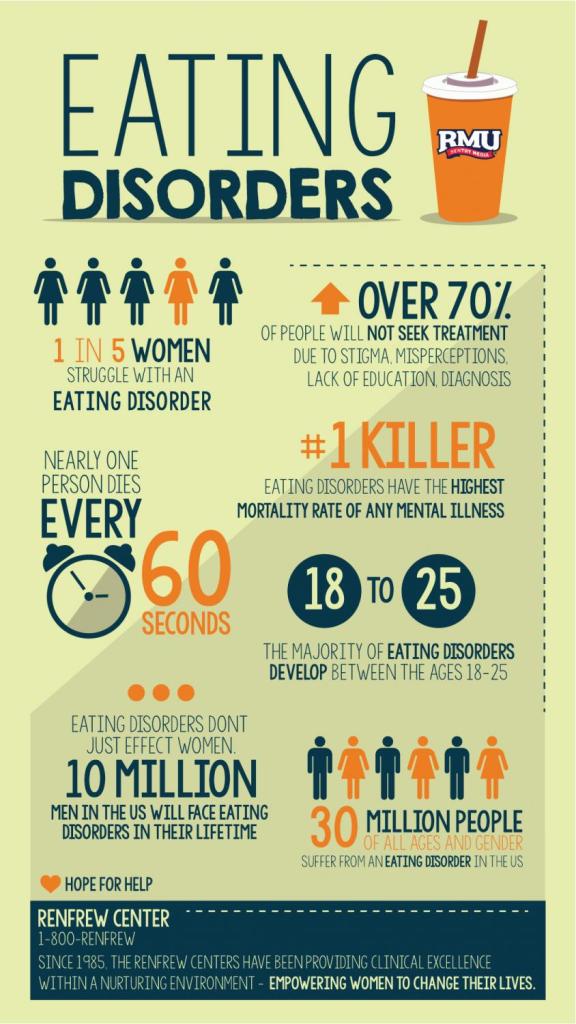
Having the highest mortality rate of any mental illness, eating disorders should be treated mindfully and strategically by media outlets – the importance cannot be overstated. Regarding the target audience, the video intends to not only remind incumbent insiders of the entertainment industry of pains they should be accountable for, but also urge the upcoming generation of media makers to initiate and engage in the transformational renewal of this social institution – in which we acknowledge its power and “befriend” with it to tackle paramount social issues such as eating disorder.
Reference & Sources:
Articles:
https://www.nationaleatingdisorders.org/blog/mindfulness-in-media-eating-disorder-coverage
https://www.huffpost.com/entry/thinspiration-blogs_n_1264459
https://www.mirror.co.uk/news/real-life-stories/thinspiration-selfies-killed-me-anorexia-5245488
Media Effects Research: A Basic Overview (Sparks, 2015)
Source Videos:
Background Music:
 Essie Liu