
“There is a much greater skepticism toward the memories of those who claim abuse than toward the memories of those who deny it.”
― Sue Campbell, Relational Remembering: Rethinking the Memory Wars
At the age of 6, when the prince put his lips onto those of sleeping beauty’s, I was introduced to the idea of ‘sexual relationship’ with its ineffable seductiveness and unfathomable charm. Nearly a ritual for me, ‘sex’ connoted the sharing desire and pleasure between bonded individuals. I had never imagined some people at the same age cohort as me would have an absolutely different understanding of the kiss portrayed because it was imposed onto the princess without consent, just as how ‘sex’ was forcefully inserted into their lives by violence, coercion, and manipulation as revealed by the data: before the age of 18, one in four girls and one in six boys will be sexually abused. (Children and Teens: Statistics, 2018)
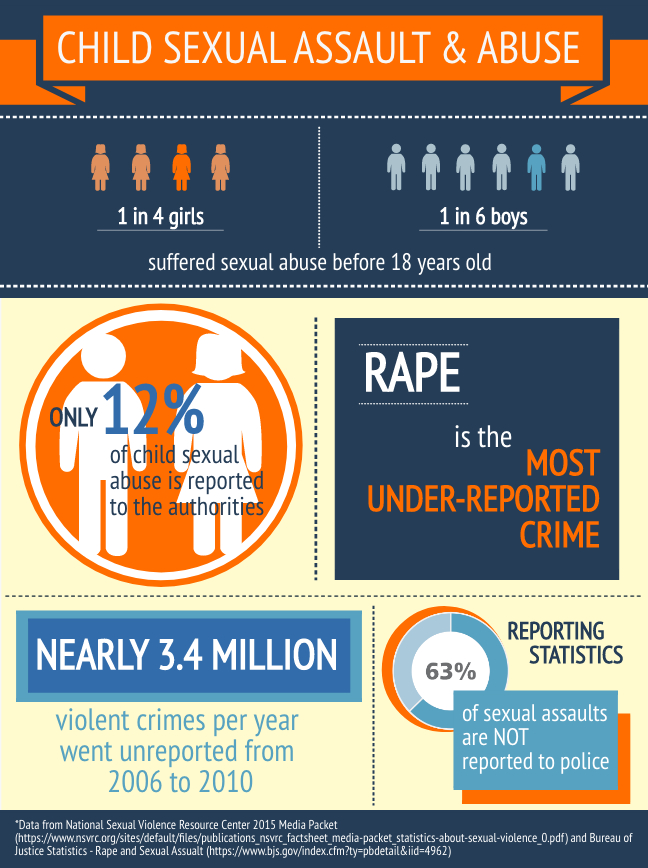
What even shattered my heart into pieces is the fact that, on the dire contrast to its prevalence, rape is the most under-reported crime: From 2006 to 2010, nearly 3.4 million violent crimes were unreported annually, among which 63% of sexual assaults went unreported from the police. More specifically, regarding the cases of child sexual abuse, only 12% of them were reported to the authorities. (Kimble, 2018)
Petrified, I can’t imagine how those tender souls represented by aforementioned statistics swallowed down the extreme emotions brought up by traumatic encounters – fear, rage, shame, confusion, and helplessness. Moreover, I deem the rationales behind those numbers resided more significance than the data itself. Why victims remained silent? And more importantly, what societal and structural barriers should be removed to enable the survivors stepping out of the shadow and voice out their experience to attain necessary support and comprehension?
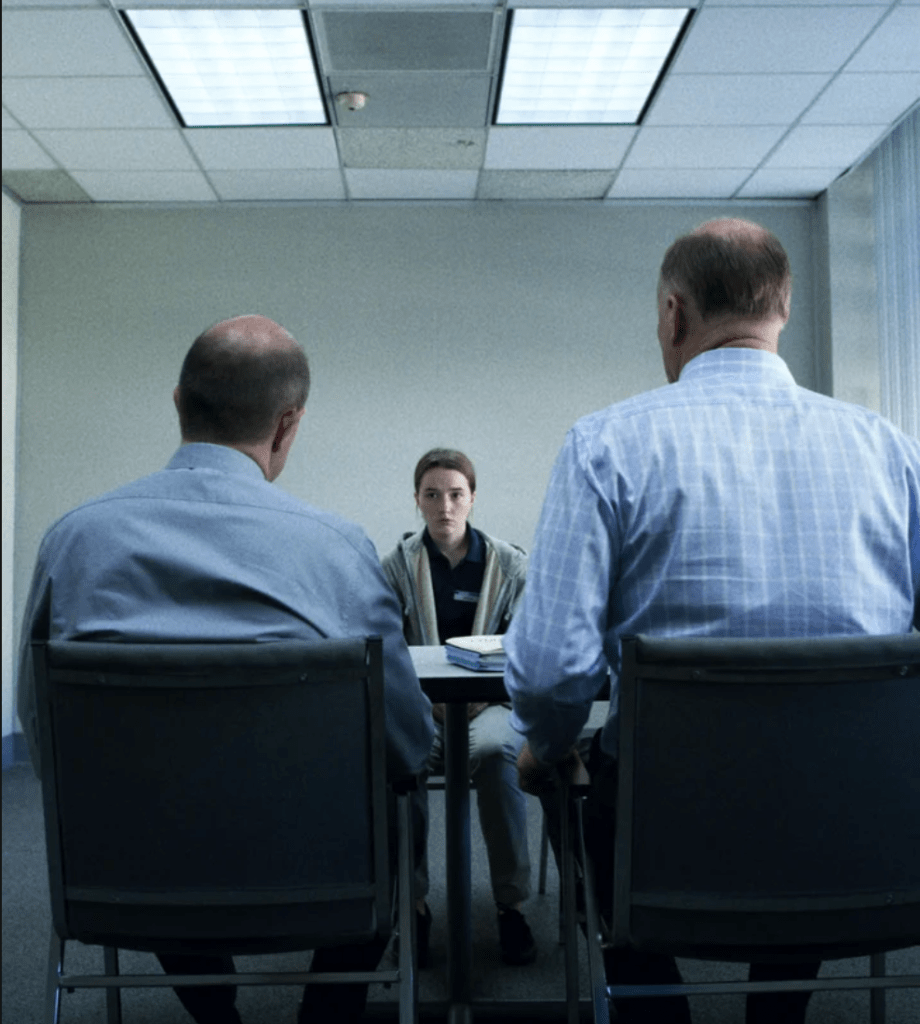
On the one hand, the silence could be based on a conscious, self-protective choice of avoiding wounds being opened time after time. Many victims reported a fear of retaliation from not only the perpetrators but also the society. Depicted in the 2019 Netflix series Unbelievable, victims suffer from ‘secondary victimization’ during the rape investigation in which they are required to repetitively retrieve the painful memories while every detail faces doubt. Potential victim shaming from the crowd is also a primary deterrent of reporting.
On the other hand, being voiceless could ground in the ignorance. The lack of sex education about consent and self-protection has disarmed children from the cognitive shield in recognizing threats or even distinguishing the occurrence of tragedy. As some victims trivialized the rape or sexual assault as being not important enough to report, they were clueless about how this extreme violence could exert prolonged and damaging impacts to their mental health: according to the study on the risk of psychiatric disorders and rape history, survivors are about four times more likely to develop substance abuse and PTSD as well as three times more likely to suffer from depression. (RAINN, 2018)

“The words that can offer a survivor the most comfort and hope are also some of the simplest: I believe you. ”
RAINN (Rape, Abuse, and Incest National Network)
As Sue Campbell commented, “there is a much greater skepticism toward the memories of those who claim abuse than toward the memories of those who deny it.” While the false accusations of sexual assault or rape hovered around only 2 and 10 percent in the United States, again, 63 percent of sexual assaults was buried into oblivion (BJS, 2012). It may be human’s very nature to self-blindfolded, denying or turning away from tragedies, as the coping strategy to very ugly incidents. But it’s not our excuse to let this cowardice pushing the survivors of sexual violence and assault into the abyss of silence and disbelief. To believe is to help. We should face the brutal truth and empower the survivors to speak out of their experience,. And that will be the light of hope that shine through the darkness and let evils have no place to hide.
Reference:
https://www.rainn.org/statistics/children-and-teens
https://www.brennancenter.org/blog/sexual-assault-remains-dramatically-underreported
 Essie Liu